



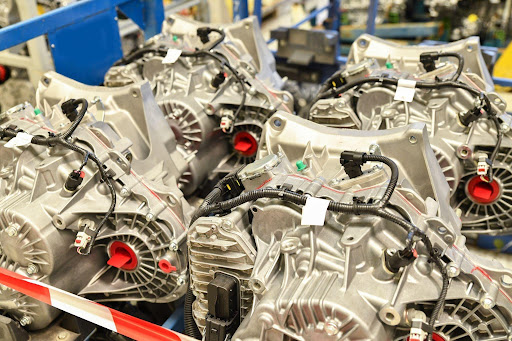
The Murano arrived on a flatbed in late spring, with a customer who needed an answer faster than her insurance adjuster was prepared to provide one. The 2010 Murano had ingested coolant after a head gasket failure that the previous shop had missed during a routine cooling system service. By the time the symptoms became impossible to ignore, the engine was beyond economical rebuild. The dealer estimate for a remanufactured VQ35 long block was $7,200 plus labor, with an eight-week wait for the part. The total cost out the door was projected at $11,800.
The customer’s vehicle was worth $9,400 in pre-failure condition. The math didn’t work.
This is a real scenario, and the resolution illustrates how independent shops with sourcing relationships convert losing situations into reasonable outcomes. The shop in question handles roughly forty engine swaps per year, weighted heavily toward Honda, Toyota, and Nissan platforms. They’ve built sourcing relationships with multiple suppliers and standardized their replacement workflow across common chassis. This particular Murano became a case study in why those relationships matter.
The decision framework
The shop’s service writer presented three options to the customer.
Option one was the dealer remanufactured engine at $7,200 in parts plus labor. Total job cost: approximately $11,800. Lead time: eight weeks.
Option two was a domestic salvage VQ35DE from a US wrecking yard at $3,400 in parts plus labor. Total job cost: approximately $5,500. Lead time: two weeks. Mileage on the donor unit: 142,000 miles, with no documented service history and no compression test data available.
Option three was an imported JDM VQ35DE pulled from a Japanese-market Nissan Teana, the Murano’s domestic-market sibling, at $2,950 in parts plus labor. Total job cost: approximately $4,950. Lead time: four days. Mileage on the donor unit: 47,000 kilometers (29,200 miles), with documented compression test results and a two-year service inspection history from the Japanese auction sheet.
The customer asked the obvious question. Why is the imported engine cheaper than the domestic salvage engine, and why is its mileage so much lower?
The supply chain answer
The supply chain explanation is the same for every platform but bears repeating in the Nissan context. Japan’s vehicle inspection program, shaken, pushes vehicles out of registration earlier than American economics push them off the road. A 2010 Teana that had passed three biennial inspections was accumulating costs that exceeded its market value to a Japanese owner, even though by American standards the vehicle still had a decade of useful life remaining. The owner sold it. The dismantler stripped it. The engine entered the export pipeline with relatively low mileage and intact maintenance records.
This is the structural reason why the inventory of Nissan JDM engine selection frequently includes VQ-series units with mileage that would be impossible to find in the domestic salvage market at any price. The donor population is fundamentally different. The American salvage VQ35 came out of a vehicle with 140,000 miles because that’s when American owners typically retire midsize SUVs. The Japanese-sourced unit came out of a vehicle with 30,000 miles because that’s when the Japanese inspection economics tipped against the original owner.
The price differential is partly transit cost and partly market dynamics. Imported engines arrive in volume, multiple units per container, and the per-unit handling cost is lower than the per-unit cost of pulling a single engine from a domestic salvage yard. The labor cost of dismantling at the source, performed in Japan, is also typically lower per unit than equivalent domestic dismantling.
What actually happened with this Murano
The shop and the customer agreed on option three.
The engine arrived on day five, one day later than promised, which is normal in this business. The pre-installation inspection added one day. The actual swap took two days of shop time. The vehicle was returned to the customer on day nine.
Three things were replaced before installation that weren’t part of the basic engine purchase: timing chain tensioner, valve cover gaskets, and the front main seal. Total additional parts cost: $187. This is the spend that determines whether a JDM swap succeeds or fails. Skipping it to save the $187 is the most common cause of post-installation problems on this platform.
The total job cost came in at $5,140, slightly above the projected $4,950 due to the addition of a new accessory belt and a fresh thermostat. The customer paid $5,140 against a vehicle worth $9,400, and the math now made sense.
Twelve months later, the vehicle was still on the road with no transmission complaints, no coolant issues, and no leak development. The engine had accumulated about 14,000 additional miles. The compression numbers, when checked at the one-year service interval, were still within spec.
This is a normal outcome for properly executed JDM swaps. It is not a remarkable outcome. It is the expected outcome when the supply chain is honest, the inspection is thorough, and the installation includes the maintenance items that should be done while the engine is accessible.
The strategic takeaway for shop owners
The shop in this case has built a small competitive advantage that compounds over time. Every Murano, Maxima, Pathfinder, or Z owner with a tired VQ35 in the local market eventually hears about this shop from someone who knows someone. Word of mouth on independent repair shops moves slowly but reliably, and the shops that consistently solve unsolvable problems build referral pipelines that don’t dry up.
The capital investment to enter this market is not large. The required equipment is the same equipment any competent shop already owns. The required knowledge is procedure-specific, which engines swap cleanly, which require harness adapters, which need ECU reflashes, what fluid specifications to use, and what pre-installation services are non-negotiable. That knowledge can be developed inside of a year by a shop that’s serious about it.
The required relationship is with a supplier who treats the inspection step seriously and stands behind the units. This is the limiting factor for most shops trying to enter the JDM-sourced replacement market. The good suppliers exist; finding them and developing the relationship is the work.
For the shop that completed this Murano job, the customer’s referral rate over the following year produced four additional engine jobs from her network. The total margin on those five jobs combined exceeded what the shop would have earned from a year of routine maintenance work. The economics of a single sourcing relationship, applied repeatedly, scale faster than most shop owners initially expect.
The Murano in question is still in regular service, the customer is still telling the story, and the shop has standardized this exact playbook for VQ35 replacements going forward. None of which would have been possible with the dealer estimate as the only option on the table.
