



Introduction
Modern agriculture is rapidly evolving to meet the growing demand for food while protecting natural resources. One of the most promising developments in this space is Innovative Smart Farming Solutions for Sustainable Farming, which combine advanced technologies with traditional agricultural practices to improve productivity, reduce waste, and ensure long-term environmental balance. These solutions are reshaping how farmers grow crops, manage livestock, and utilize resources efficiently.
What Are Smart Farming Solutions?
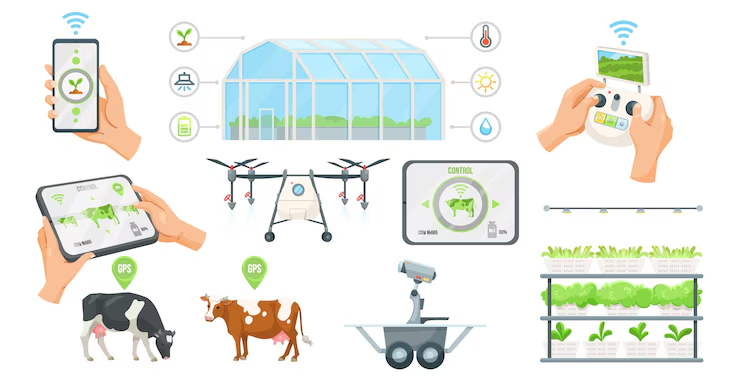
Smart farming refers to the use of digital technologies such as sensors, automation, and data analytics to optimize agricultural operations. At the core of Innovative Smart Farming Solutions for Sustainable Farming is the idea of making farming more precise and efficient.
Key technologies include:
- Internet of Things (IoT) for real-time monitoring
- Drones for crop surveillance and spraying
- Artificial intelligence for predictive analytics
- GPS-guided tractors and machinery
These technologies help farmers make data-driven decisions that improve yield while minimizing environmental impact.
Role of Precision Agriculture in Sustainability
Precision agriculture plays a crucial role in modern farming systems. It ensures that crops receive exactly what they need—no more, no less.
Through Innovative Smart Farming Solutions for Sustainable Farming, farmers can:
- Optimize water usage through smart irrigation systems
- Apply fertilizers only where needed
- Monitor soil health continuously
- Reduce pesticide overuse
Organizations like the Food and Agriculture Organization of the United Nations actively promote such sustainable methods worldwide to combat food insecurity and climate change.
Smart Farming Technologies Transforming Agriculture
1. IoT-Based Smart Sensors
Sensors placed in fields collect real-time data on soil moisture, temperature, and nutrient levels. This enables farmers to take immediate action when conditions change.
2. AI and Machine Learning
Artificial intelligence helps predict crop diseases, weather patterns, and yield outcomes, making farming more proactive than reactive.
3. Autonomous Machinery
Companies like John Deere are developing self-driving tractors and smart harvesters that reduce labor costs and improve efficiency.
4. Satellite and Drone Imaging
High-resolution imaging helps farmers monitor large fields and detect issues early, improving overall crop management.
Role of Research and Global Institutions
Research organizations are essential in advancing agricultural innovation. The International Rice Research Institute has been instrumental in developing sustainable rice farming techniques that support food security in many developing countries.
These institutions contribute to Innovative Smart Farming Solutions for Sustainable Farming by:
- Developing climate-resilient crop varieties
- Promoting water-efficient farming systems
- Training farmers in modern agricultural techniques
Benefits of Smart Farming for Sustainability
The adoption of smart farming technologies brings several long-term benefits:
- Reduced environmental footprint
- Increased crop productivity
- Efficient use of natural resources
- Improved farmer income stability
- Better adaptation to climate change
By integrating Innovative Smart Farming Solutions for Sustainable Farming, agriculture becomes more resilient and capable of meeting future global food demands.
Challenges in Implementation
Despite its advantages, smart farming faces several challenges:
- High initial investment costs
- Limited access to technology in rural areas
- Lack of technical knowledge among farmers
- Connectivity issues in remote regions
Addressing these challenges is essential for widespread adoption.
Conclusion
The future of agriculture depends heavily on technology-driven innovation. Innovative Smart Farming Solutions for Sustainable Farming are not just improving efficiency but also ensuring that farming remains environmentally and economically sustainable. With continued support from global organizations, technology providers, and governments, smart farming can transform agriculture into a more productive and sustainable system for future generations.
